
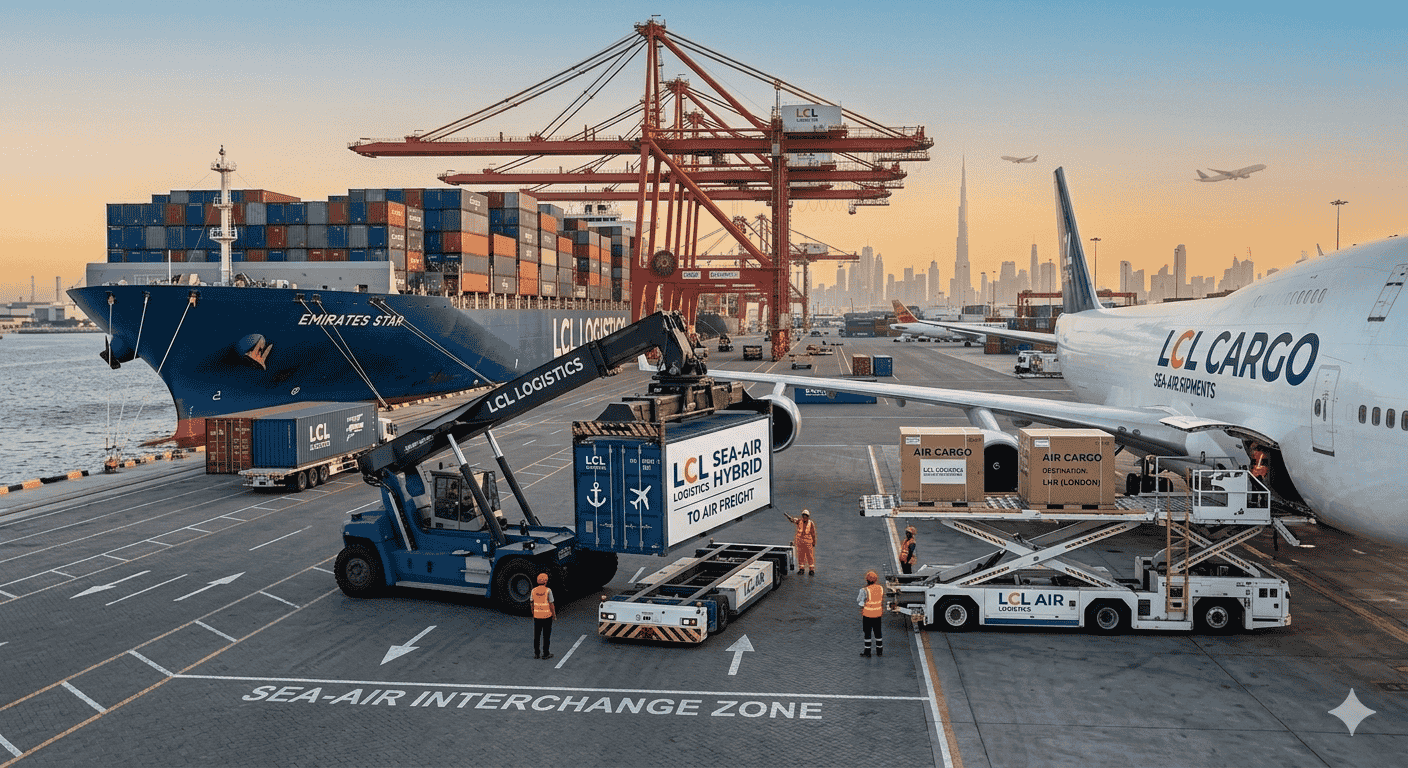

Sea-Air Shipments is a hybrid transport solution that combines the cost-effectiveness of sea freight with the speed of air freight. It is designed for businesses that need a middle ground—faster than the ocean but significantly cheaper than pure air transport.
1. The Mechanics: How it Flows
The Sea Leg: Goods are shipped via ocean container from the origin (e.g., a manufacturing hub in Southeast Asia) to a strategic transit hub (often Dubai, Singapore, or Colombo).
The Interchange: At the transit hub, the cargo is swiftly transferred from the seaport to the airport.
The Air Leg: The cargo is then loaded onto a freighter or passenger plane for the final "express" journey to the destination (e.g., Europe or the US).
2. Why Use Sea-Air?
Cost Savings: It can be up to 30-50% cheaper than shipping 100% by air.
Time Efficiency: it is typically 80% faster than shipping 100% by sea. For example, a journey that takes 40 days by sea might take only 15–18 days via Sea-Air.
Inventory Balance: It’s an ideal "emergency" solution for when sea shipments are delayed or when air freight budgets are exhausted.
Reduced Carbon Footprint: Because a large portion of the journey is by sea, it produces fewer carbon emissions than a pure air shipment.
3. Who Benefits Most?
Fashion & Retail: To get seasonal collections into stores quickly without the high cost of air.
Electronics: When a product launch is approaching and sea freight is too slow.
Promotional Goods: For time-bound marketing materials or event equipment.
The LCL Logistics Advantage
In our operations, we utilize Sea-Air Interchange Zones to ensure the transition from the vessel to the aircraft is seamless. By using a single-window approach, we manage the documentation and technical hand-off so that your cargo never "idles" at the transit hub.